
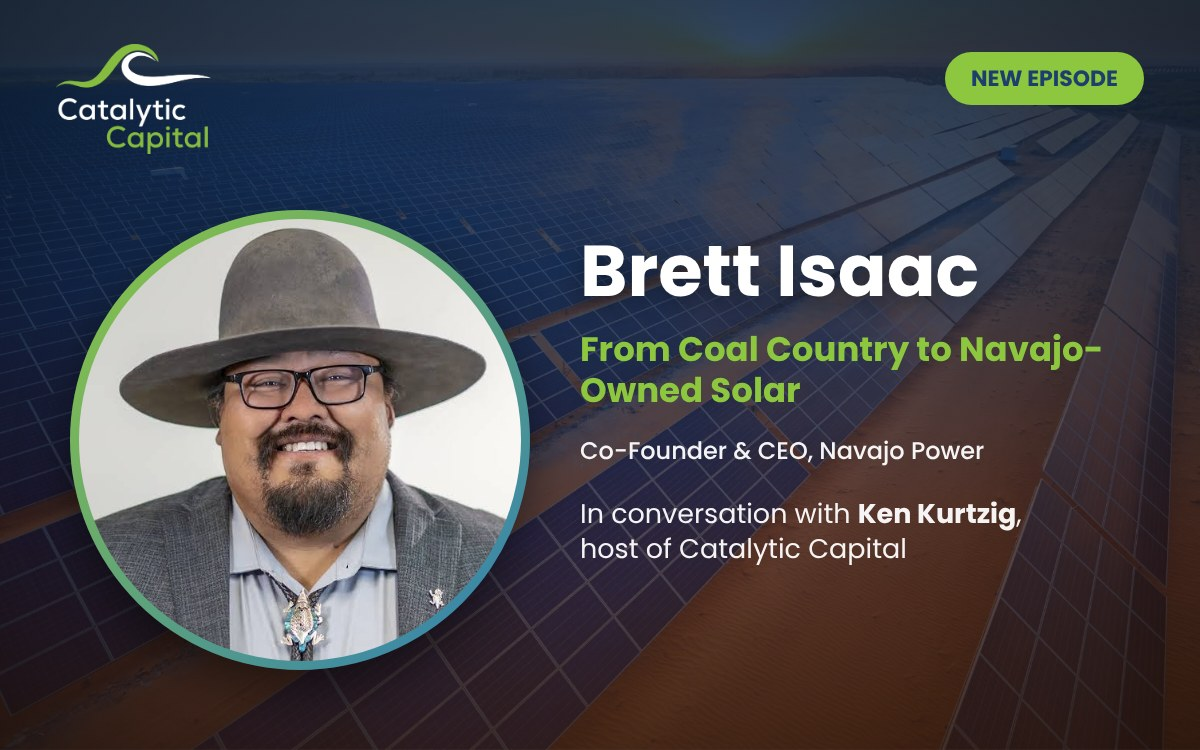
Brett Isaac: From Coal Country to Navajo-Owned Solar
With Brett Isaac
For decades the Navajo Nation powered the American Southwest. The coal under Black Mesa ran the Navajo Generating Station, 2.25 gigawatts that lit Phoenix, Las Vegas and Los Angeles, while thousands of Navajo families lived under the transmission lines with no electricity of their own. Brett Isaac grew up next to the Kayenta mine, in a family that worked in coal. As a kid he rode with his uncles to load trucks with coal for the winter, came home covered in black dust, and started wondering who was going to clean it up.
In his twenties he started putting solar panels on off-grid homes in his father's community of Shonto. About 200 homes later he co-founded Navajo Power, a Native-owned developer building utility-scale solar and storage on tribal land, with the Nation sharing in the ownership. Its Painted Desert Power project is 750 megawatts on nearly 5,000 acres, one of the largest solar and battery projects in the Southwest, and the first commercial lease for a utility-scale project on the Navajo Nation. Its residential arm, Navajo Power Home, has put solar and batteries on more than 600 homes, with a goal of 3,000 by 2031.
The first money behind it was not bank money. It was impact investors and foundations: Candide Group, the W.K. Kellogg Foundation, the Sierra Club Foundation, Halloran Philanthropies, the Schmidt Family Foundation, and sixteen CataCap donors who have put more than $360,000 into the Navajo Power fund.
In this episode:
• The elder in Shonto who had no light bulbs, so the first proof her house had power was the refrigerator light, after years of keeping food on dry ice • Why coal workers were the most skeptical customers for off-grid solar, and what changed their minds • Nicole Horseherder, the Navajo matriarch and activist who was the toughest skeptic of Painted Desert, and how she became a supporter • The Turquoise Share: how Navajo Power gives communities equity in the developer instead of handing them a power plant and its liabilities • What Brett got wrong early on, and why eight years of development on tribal land opens the door for every other tribe • What he would tell a friend with a donor-advised fund who has never made an impact investment
Brett's line to remember: "Your light switch at some point is tied to one of our facilities."
Mentioned: Navajo Power, Navajo Power Home, Painted Desert Power, Shonto, Kayenta and Black Mesa mines, Navajo Generating Station, Nicole Horseherder, Turquoise Share, Mission Delta fund, Candide Group, W.K. Kellogg Foundation, Sierra Club Foundation, Halloran Philanthropies, Schmidt Family Foundation, CataCap.
You can invest alongside the sixteen donors already in the Navajo Power fund, starting at $250, at https://catacap.org/investments/navajo . If this conversation inspired you, share it with a friend who gives, and follow Catalytic Capital so you don't miss the next one.
About the guest
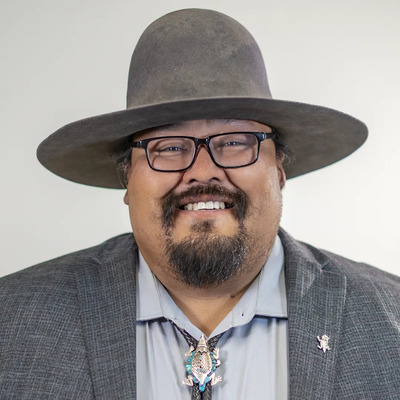
Brett Isaac
Founder and CEO of Navajo Power, a Native-owned developer building utility-scale solar and storage on tribal land with tribes sharing in the ownership. Brett grew up next to the Kayenta coal mine on the Navajo Nation and started putting solar on off-grid homes in his twenties. Navajo Power's Painted Desert Power project is the first commercial lease for a utility-scale project on the Navajo Nation, and Navajo Power Home has brought solar and battery storage to more than 600 homes.
Key moments
- 1Riding to the Kayenta mine as a kid and coming home covered in coal dust
- 2The elder whose refrigerator light was the first proof her house had power
- 3Why coal workers were the most skeptical customers for off-grid solar
- 4Nicole Horseherder: from toughest skeptic to supporter
- 5The Turquoise Share: equity in the developer, not a power plant's liabilities
- 6What Brett would tell a friend with a donor-advised fund
Featured investment
Loading featured investment…
Put your giving to work for impact.
Discover mission-driven ventures alongside a community.
Get started