
The Catalytic Capital Podcast
Hosted by Ken Kurtzig. New episodes monthly.
Listen to the latest episodes
Explore the conversations behind the ideas, investments, and leaders moving impact forward.
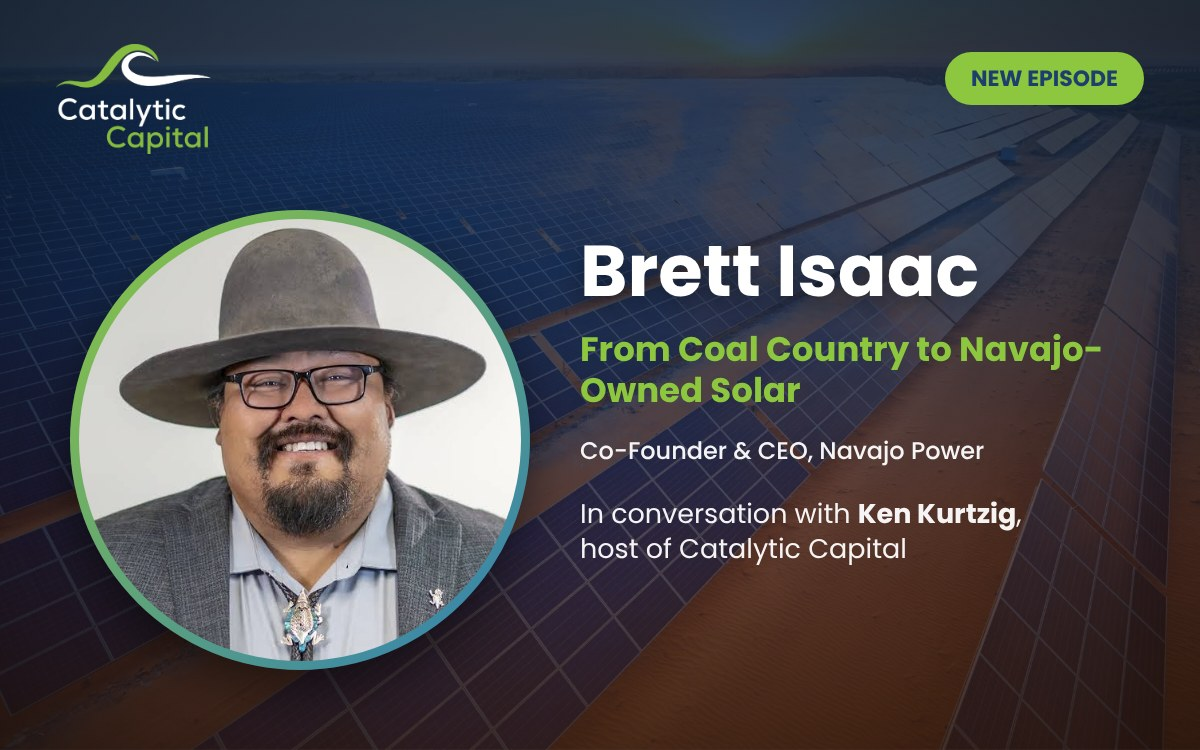
Brett Isaac: From Coal Country to Navajo-Owned Solar
For decades the Navajo Nation powered the American Southwest. The coal under Black Mesa ran the Navajo Generating Station, 2.25 gigawatts that lit Phoenix, Las Vegas and Los Angeles, while thousands of Navajo families lived under the transmission lines with no electricity of their own. Brett Isaac grew up next to the Kayenta mine, in a family that worked in coal. As a kid he rode with his uncles to load trucks with coal for the winter, came home covered in black dust, and started wondering who was going to clean it up. In his twenties he started putting solar panels on off-grid homes in his father's community of Shonto. About 200 homes later he co-founded Navajo Power, a Native-owned developer building utility-scale solar and storage on tribal land, with the Nation sharing in the ownership. Its Painted Desert Power project is 750 megawatts on nearly 5,000 acres, one of the largest solar and battery projects in the Southwest, and the first commercial lease for a utility-scale project on the Navajo Nation. Its residential arm, Navajo Power Home, has put solar and batteries on more than 600 homes, with a goal of 3,000 by 2031. The first money behind it was not bank money. It was impact investors and foundations: Candide Group, the W.K. Kellogg Foundation, the Sierra Club Foundation, Halloran Philanthropies, the Schmidt Family Foundation, and sixteen CataCap donors who have put more than $360,000 into the Navajo Power fund. In this episode: • The elder in Shonto who had no light bulbs, so the first proof her house had power was the refrigerator light, after years of keeping food on dry ice • Why coal workers were the most skeptical customers for off-grid solar, and what changed their minds • Nicole Horseherder, the Navajo matriarch and activist who was the toughest skeptic of Painted Desert, and how she became a supporter • The Turquoise Share: how Navajo Power gives communities equity in the developer instead of handing them a power plant and its liabilities • What Brett got wrong early on, and why eight years of development on tribal land opens the door for every other tribe • What he would tell a friend with a donor-advised fund who has never made an impact investment Brett's line to remember: "Your light switch at some point is tied to one of our facilities." Mentioned: Navajo Power, Navajo Power Home, Painted Desert Power, Shonto, Kayenta and Black Mesa mines, Navajo Generating Station, Nicole Horseherder, Turquoise Share, Mission Delta fund, Candide Group, W.K. Kellogg Foundation, Sierra Club Foundation, Halloran Philanthropies, Schmidt Family Foundation, CataCap. You can invest alongside the sixteen donors already in the Navajo Power fund, starting at $250, at https://catacap.org/investments/navajo . If this conversation inspired you, share it with a friend who gives, and follow Catalytic Capital so you don't miss the next one.
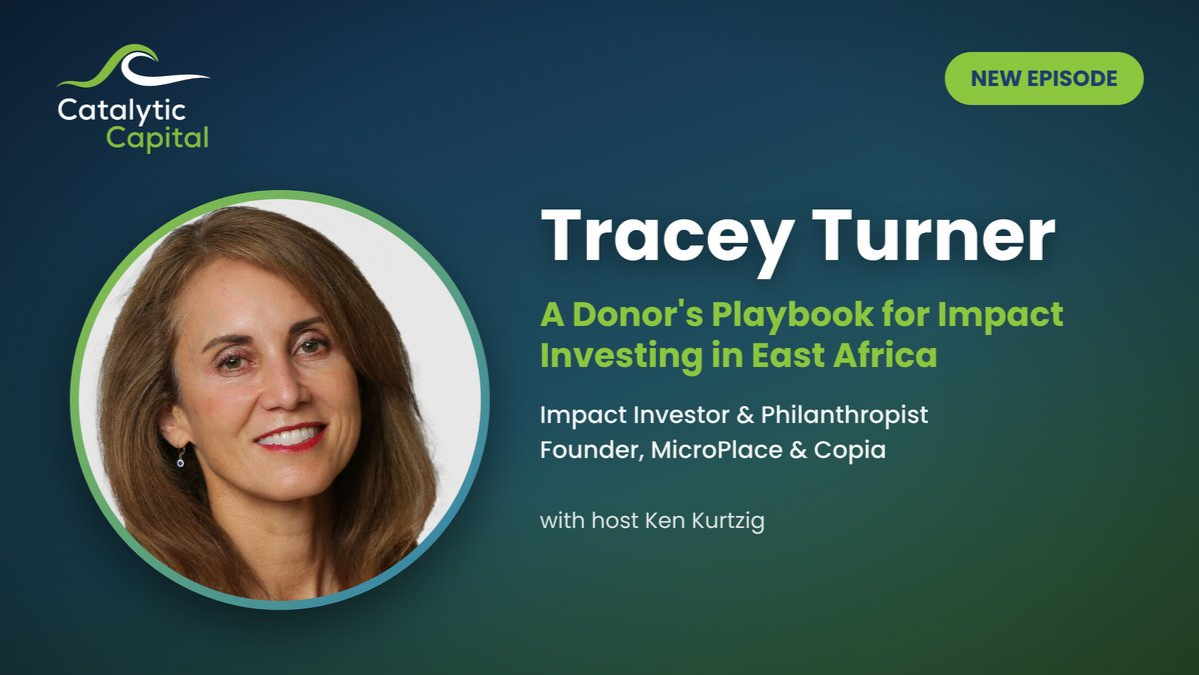
Tracey Turner: A Donor's Playbook for Impact Investing in East Africa
Tracey Turner has spent three decades proving that the best answer to poverty is often a business. She started at Grameen Bank in Bangladesh, founded MicroPlace, one of the first online platforms that let everyday Americans invest in microfinance (later acquired by eBay), and founded Copia, which turned 52,000 small shopkeepers across Kenya into e-commerce entrepreneurs and hubs for their communities simultaneously increasing their financial earnings 2-3x. Today she is early to an exciting new way to use philanthropy. She has CataCap invest a meaningful share of her giving in early-stage companies in East Africa, in the cause she cares about most: lifting people out of poverty. When those investments return capital, it returns to the charitable assets held by CataCap and is credited to her charitable account to recommend again, multiplying the impact of every dollar she gives. This conversation is a field guide for anyone with a donor-advised fund, a foundation or an annual giving budget who wants their money to do more. Tracey takes us to a roadside shop in rural Kenya where a woman named Teresia doubled her income and sent her kids to school, and to a hillside near Mombasa where six women farmers may become the country's first coastal cocoa growers. She explains what she looks for in a founder, why she goes to see every business in person, and why the fact that less than 1% of global venture capital reaches Africa is the opportunity, not the obstacle. In this episode: • Why Tracey thinks of her philanthropy as capital, and how the returns get recycled into the next investment • The criteria she uses to back an entrepreneur • What she learns on the ground that never shows up in a pitch deck • How a DAF can fund for-profit social enterprises, and what to check in the fine print If you give generously and have ever wondered whether your philanthropy could work harder, this is the episode to start with. Companies mentioned: 10X Nutrition, Nuru Solutions, Copia, MicroPlace. Learn more and see current investment opportunities at catacap.org. If this conversation inspired you, share it with a friend who gives, and follow Catalytic Capital so you don't miss the next one.
Building the future of handmade: Roberto Milk on NOVICA, AI and artist empowerment
What happens when technology helps human creativity thrive instead of replacing it? In this episode of Catalytic Capital, host Ken Kurtzig speaks with Roberto Milk, co-founder and CEO of NOVICA and Handmade.com, about his 25-year journey building a global marketplace that connects artisans directly with customers. Roberto shares how an unexpected conversation in a Stanford Portuguese class inspired NOVICA, how the company pioneered online artisan commerce before Etsy existed, and how it has delivered more than $144 million to artisans worldwide. He and Ken also explore NOVICA’s impact on women, families and local economies; the importance of preserving cultural traditions; and how Handmade.com plans to use AI to help millions of artisans reach global customers while protecting the authenticity of human-made products. NOVICA has already raised more than $100,000 from 15 donor-investors through CataCap. Learn more about NOVICA, its impact and the opportunity to support its next chapter: https://catacap.org/investments/novica Follow Catalytic Capital for more conversations with entrepreneurs using business and investment capital to address some of the world’s most pressing social and environmental challenges.
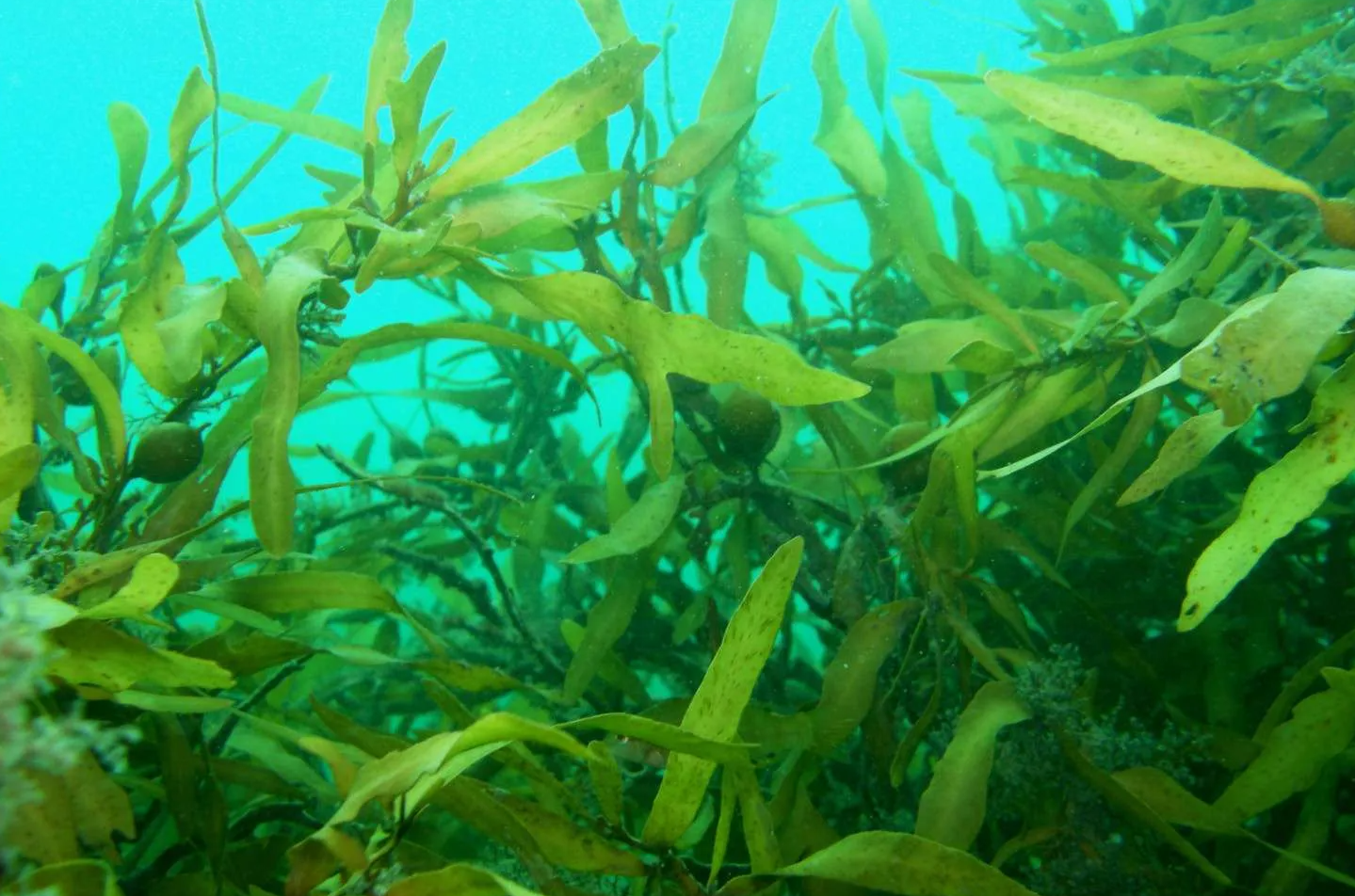
Ocean Catalysts: Funding the Future Beneath the Surface
What if seaweed could help replace petroleum-based plastics, restore ocean ecosystems, and transform everyday consumer products? In this episode of Catalytic Capital, host Ken Kurtzig speaks with Katie Weiler, founder and CEO of Viable Gear, and Justin MacNaughton, co-founder of 4Kelp Skincare. Katie shares how Viable Gear is turning seaweed into SeaTwine—a marine-degradable, compostable alternative to plastic twine used in agriculture and aquaculture. Justin explains how 4Kelp is developing clean, kelp-powered skincare in plastic-free, home-compostable packaging while supporting kelp restoration and ocean advocacy. They discuss the science behind seaweed-based materials, the challenge of competing with inexpensive conventional products, the journey from an ambitious idea to a market-ready product, and why patient, mission-aligned capital is essential for building a more regenerative economy. Learn more and invest through CataCap: Viable Gear: https://catacap.org/investments/ViableGear 4Kelp Skincare: https://catacap.org/investments/4kelpskincare
Empower Her: Transforming Capital For Women-Led Ventures
In this episode of Catalytic Capital, host Ken Kurtzig dives into the transformative world of women-led ventures with Lily Kanter and Beth Stelluto, co-founders of the groundbreaking Empower Her initiative on the CataCap platform. Together, they explore the unique challenges women face in raising capital and the game-changing mission of Empower Her.
Looking for more CataCap stories?
Browse news, case studies, and updates from the CataCap community.